I work where energy, institutions, and decisions meet. A decade across Iraq’s public-private energy ecosystem taught me to turn complexity into decision systems: from markets and contracts to governance, risk, and execution.
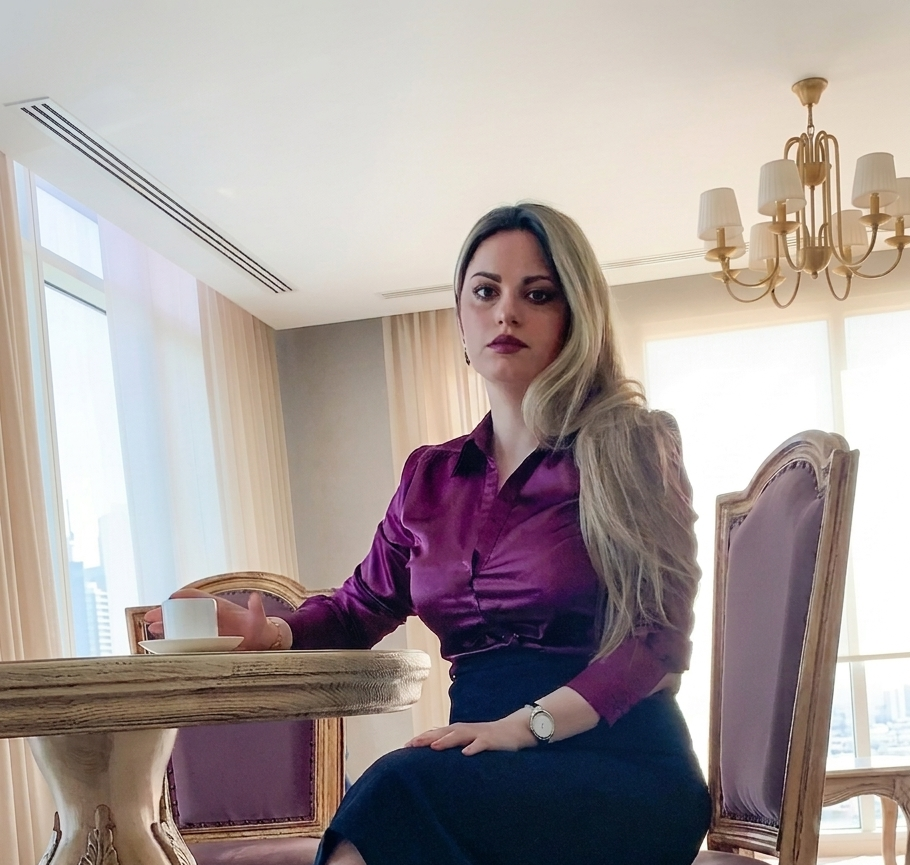
Iraqi at heart.
German in method.
Commercial engineering across power, EPC, tenders, sourcing, contracts, and infrastructure.
Senior public-sector, board-level, client, and international OEM interfaces.
Market intelligence, authority matrices, organisational design, and decision infrastructure.
Arabic public-interest knowledge built from the same systems instinct.
I learned to read systems where mistakes cost time, money, and infrastructure.
Power projects trained me to think through constraints, interfaces, risk, suppliers, contracts, compliance, execution, and the cost of weak coordination.
My work sits at the intersection of markets, institutions, governance, and execution.
I move between public-sector realities, private-sector execution, and international standards, looking for where decisions break, incentives collide, and better structure can make action possible.
One method. Five operating modes.
The titles changed. The underlying instinct did not: understand the system, find the constraint, then build the missing structure.
Technical logic, constraints, interfaces, and consequences.
Markets, bids, sourcing, contracts, partners, and risk.
Board priorities, organisational problems, trade-offs, and follow-through.
Frameworks, matrices, governance tools, digital systems, and organisational memory.
BigScis: translating complexity into research-led Arabic knowledge and practical mental models.
Systems I Built
Selected frameworks and decision tools I developed or helped build inside Private sector, each tied to a real operational problem and a visible proof point.
Clarifying who decides what.
Designed a responsibilities matrix to reduce conflicts of authority and clarify decision rights across senior organisational levels. The work fed into a formal financial and administrative authority framework adopted by Company.
Turning an opaque market into a decision framework.
Built an Iraq market study and go-to-market framework for a Honeywell PPE distributorship, combining macroeconomic data, public-budget allocations, regulation, customer segmentation, competitive positioning, and staged actions.
Moving from symptoms to operating systems.
Analysed organisational structure, workload, incentives, control gaps, cross-functional silos, and communication, then developed recovery priorities and strategic recommendations for management and the Board.
Building organisational memory.
Sourced and supported digital tools for CRM, project management, procurement, pricing, and estimation, while helping structure knowledge that could be reused across future bids and decisions.
Turning an international standard into local capability.
Coordinated commercial and project interfaces during ASME certification journey as the company built the capability to execute specialised certified work under its own stamp.
Turning two decades of history into a usable record.
Undertook the research, data collection, information architecture, narrative development, visualisation, and design of 48-page 2023 company profile and marketing material.
One problem. Three logics.
The same infrastructure problem changes shape depending on who owns the decision.
Institutions
Authority, budgets, regulation, public value, legitimacy, and political time horizons.
Operators
Commercial risk, cash flow, contracts, incentives, delivery, and execution.
OEMs & partners
Technology, compliance, global standards, governance, reputation, and risk controls.
Global standards. Local execution.
Technical-commercial interfaces across major energy and EPC organisations.
 GE Vernova
 Siemens Energy
 ENI
ENI
 Linxon
 Baker Hughes
Institutional Scale & Operating Context
I worked with former statesmen، ministers, and energy executives including senior public-sector leaders, who helped shape the sector through some of the country’s most consequential years of reconstruction and state-building. These figures show the operating environment in which I worked, alongside the contribution I made within it.
4,500+ MW
Contributed to technical-commercial proposals and tenders within a power portfolio exceeding 4,500 MW across generation, transmission, and distribution.
35% peak share
PEW reached a 35% peak market share in the Iraqi power sector during its strongest period. My experience spans the full business lifecycle, from market intelligence and opportunity development through tendering, sourcing, contracts, execution support, and organisational decision systems.
200 MMSCFD
Led sourcing activities for a gas-flaring recovery bid designed to process approximately 200 MMSCFD of gas and produce 1,000 tonnes of LPG per day.
20% better estimates
Contributed to improving estimation accuracy through new tools, standardised unit rates, and an estimation knowledge centre.
Reserved.
Selected proof point coming next.
Reserved.
Selected proof point coming next.
What I Bring
One method, applied across companies, institutions, and public knowledge.
Commercial and market intelligence
Experience across the full business lifecycle, including market intelligence, opportunity framing, bid strategy, market research, partner mapping, risk visibility, decision-ready briefs, tendering, sourcing, contracts, project coordination, execution support, and organisational systems.
Systems-led research and decision support
Energy, Iraq, infrastructure, institutions, governance, and public-value analysis translated into clear, usable frameworks.
Research-led Arabic knowledge
Long-form stories, mental models, systems narratives, and practical frameworks designed to make complex ideas usable.
Selected Insights
Selected notes where engineering experience becomes a lens for understanding infrastructure, risk, institutions, and decision-making.
Iraq’s $200 Billion Paradox
Baghdad is announcing historic energy agreements while the economy is projected to contract. The contradiction disappears once leaders stop watching one Iraq and start watching its three clocks.
How an Energy-Rich Country Becomes Electricity-Poor
Iraq’s power problem is not one shortage. It is a chain of broken conversions between the gas field, the turbine, the grid, the meter, and the state.
The Cheapest Supplier Can Become the Most Expensive Decision
A practical lens for evaluating price, lead time, compliance, reliability, replacement options, and project disruption.
An Arabic Home for Systems Thinking › one argument, one journey, one model that stays.
BigScis is my Arabic public-interest platform for systems thinking, decision-making, and mental models, turning complex questions into research-led stories and practical frameworks.
Engineering taught me to read systems. BigScis taught me to make them legible.
The career arc is one method moving from project execution toward decision systems and public knowledge.
From contributing to projects toward shaping the systems in which national decisions are made.
My long-term direction sits at the intersection of energy, infrastructure, institutions, public leadership, and the wider culture of decision-making.
Open to serious work where energy, institutions, and decision systems meet.
For research, advisory, institutional collaborations, energy-sector partnerships, and selected BigScis projects.